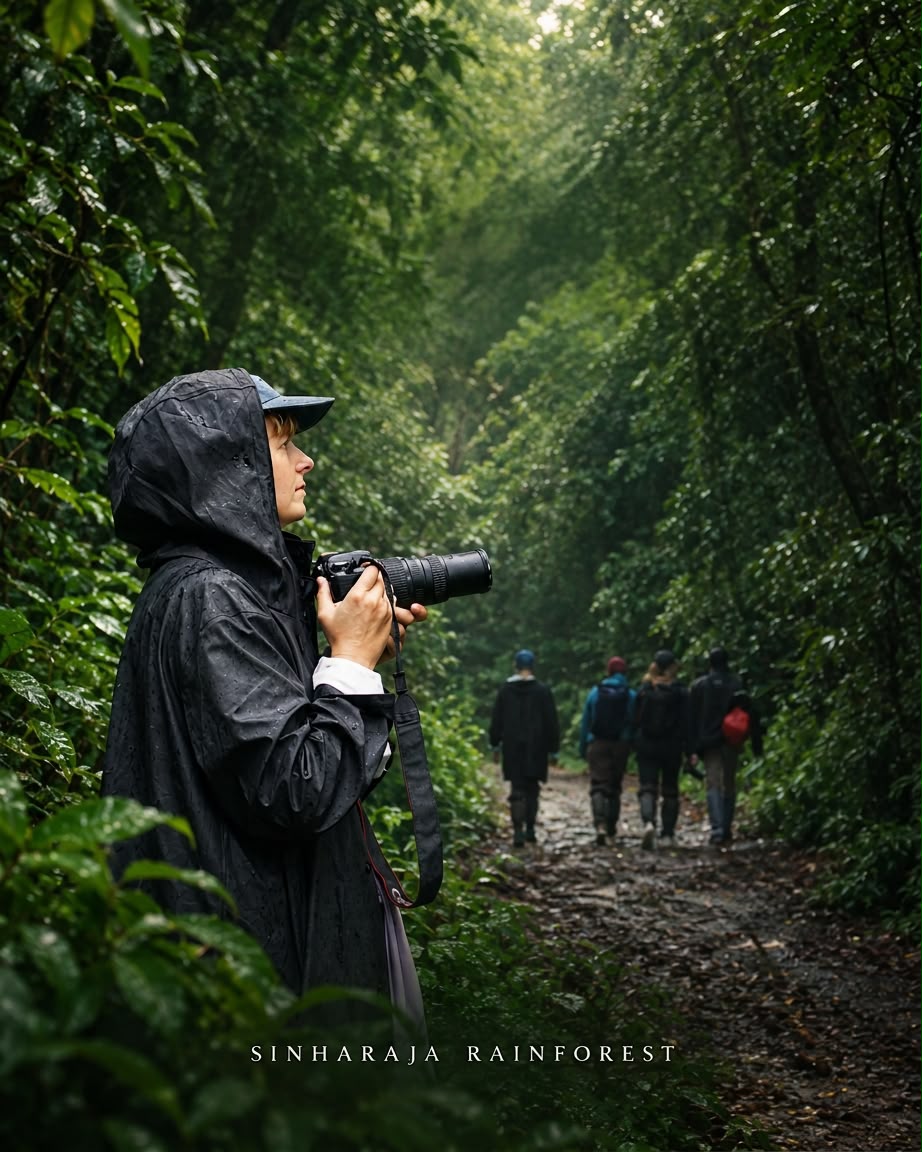
The rainforest
Discover Sinharaja
A primary tropical rainforest of global importance, home to an astonishing number of plants and animals found only in Sri Lanka.
Introduction
The Kingdom of the Lion
Sinharaja Forest Reserve is Sri Lanka's most famous rainforest and the country's last large area of primary lowland tropical rainforest. Its name means "Lion King" — a nod to legends that link the forest to the lion ancestor of the Sinhalese people.
Covering ridges and valleys in the island's wet south-west, the reserve shelters an extraordinary concentration of endemic life: towering dipterocarp trees, rare orchids, colourful birds that travel in mixed flocks, shy primates, and frogs, lizards and butterflies that exist nowhere else on the planet. For nature lovers, birders and photographers, it is one of the most rewarding destinations in South Asia.
History & background
A forest saved for the world
Sinharaja's hills have been home to rainforest for millions of years. For centuries, the steep terrain and dense vegetation kept the forest largely untouched, and local communities gathered only what they needed from its edges.
In the 1970s, selective logging began in parts of the forest. Strong public campaigns by conservationists and local people led to logging being stopped, and Sinharaja was protected as a Biosphere Reserve in 1978 and a National Wilderness Heritage Area in 1988.
UNESCO World Heritage
Recognised as a World Heritage Site in 1988
UNESCO inscribed Sinharaja on the World Heritage List for its outstanding natural value: it is the last viable area of primary tropical rainforest in Sri Lanka and holds an exceptional concentration of species found nowhere else.
The reserve is one of the island's most important sites for the conservation of endemic trees, birds, mammals, reptiles, amphibians and insects.
Location & landscape
Rolling ridges in Sri Lanka's wet south-west
Sinharaja lies in the south-western lowland wet zone, across the Sabaragamuwa and Southern provinces. The forest covers a series of ridges and valleys running east to west, rising from about 300 m to over 1,100 m at its highest peaks.
The main entrances are at Kudawa (north-west, near Weddagala), Pitadeniya (south) and the Morning Side area near Rakwana. Most visitors begin their trek from Kudawa.
Climate
Warm, humid and wonderfully wet
Sinharaja receives rain throughout the year, with the heaviest falls during the two monsoons.
Biodiversity & ecosystem
Layers of life
A tropical rainforest is built in storeys. Each layer creates its own microclimate and supports its own community of plants and animals.
- 1
Emergent layer
The tallest trees break through the canopy, exposed to sun and wind — perches for raptors and hornbills.
- 2
Canopy
A dense roof of leaves and branches where most fruit and flowers grow; home to Blue Magpies, langurs and giant squirrels.
- 3
Sub-canopy & understorey
Shade-tolerant trees, palms and shrubs where babblers, laughingthrushes and mixed bird flocks forage.
- 4
Forest floor
Dark, damp and rich in leaf litter: the realm of spurfowl, kangaroo lizards, fungi, insects and leeches.
Endemic species & habitats
More than 60% of Sinharaja's trees are endemic, and the forest supports many of Sri Lanka's endemic birds, mammals, reptiles, amphibians and butterflies. Many depend entirely on undisturbed rainforest — they cannot survive in plantations or degraded land.
Explore the wildlifeStreams, waterfalls & landscapes
Where the rain becomes rivers
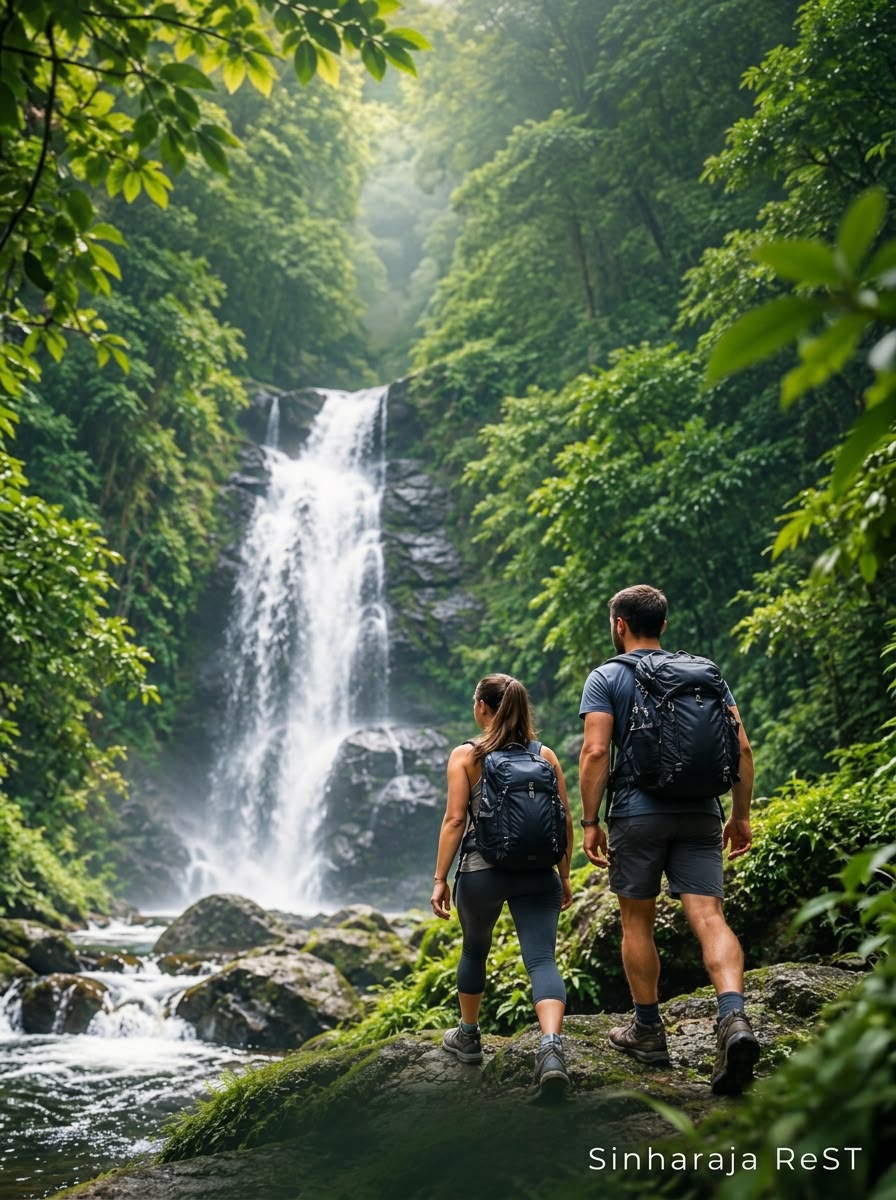
Countless clear streams drain Sinharaja's slopes, feeding the Gin Ganga to the south and the Kalu Ganga basin to the north. Along the trails you'll cross boulder-strewn brooks, cool natural pools and waterfalls that thunder after the rains.
These waterways are vital: they supply drinking and irrigation water to communities far downstream, and they are home to endemic freshwater fish, crabs and dragonflies.
Waterfall & stream trekConservation
Why protecting Sinharaja matters
Sri Lanka's wet zone once held vast rainforests. Today only fragments remain, making Sinharaja irreplaceable.
It safeguards species that exist nowhere else on Earth.
It protects river catchments that supply water to thousands of people.
It stores carbon and helps regulate the regional climate.
It supports local livelihoods through responsible ecotourism.
You can help by visiting with a licensed local guide, staying on marked trails, carrying out all your rubbish and never feeding or disturbing wildlife. Read our responsible tourism guide.